Dental Implants in Naperville, IL
Dental Implant Care for Renewed Stability, Function and Confidence
Missing teeth can make ordinary moments feel unexpectedly complicated. A favorite meal becomes difficult to enjoy. Conversation feels less natural. Smiling may require a second thought. Dental implants offer a stable foundation for rebuilding what has been lost without relying solely on removable appliances or neighboring teeth.
At Oral & Facial Surgery of Naperville, board-certified oral and maxillofacial surgeons Maher Jandali, DMD, MD, and John Hur, DDS, MD, perform implant surgery for patients missing one tooth, several teeth, or a complete dental arch. Treatment is guided by 3D imaging, careful surgical planning, and coordination with the dentist who will create the final restoration.
Our downtown Naperville practice serves patients throughout DuPage County and the greater Chicagoland area.
What Is a Dental Implant?
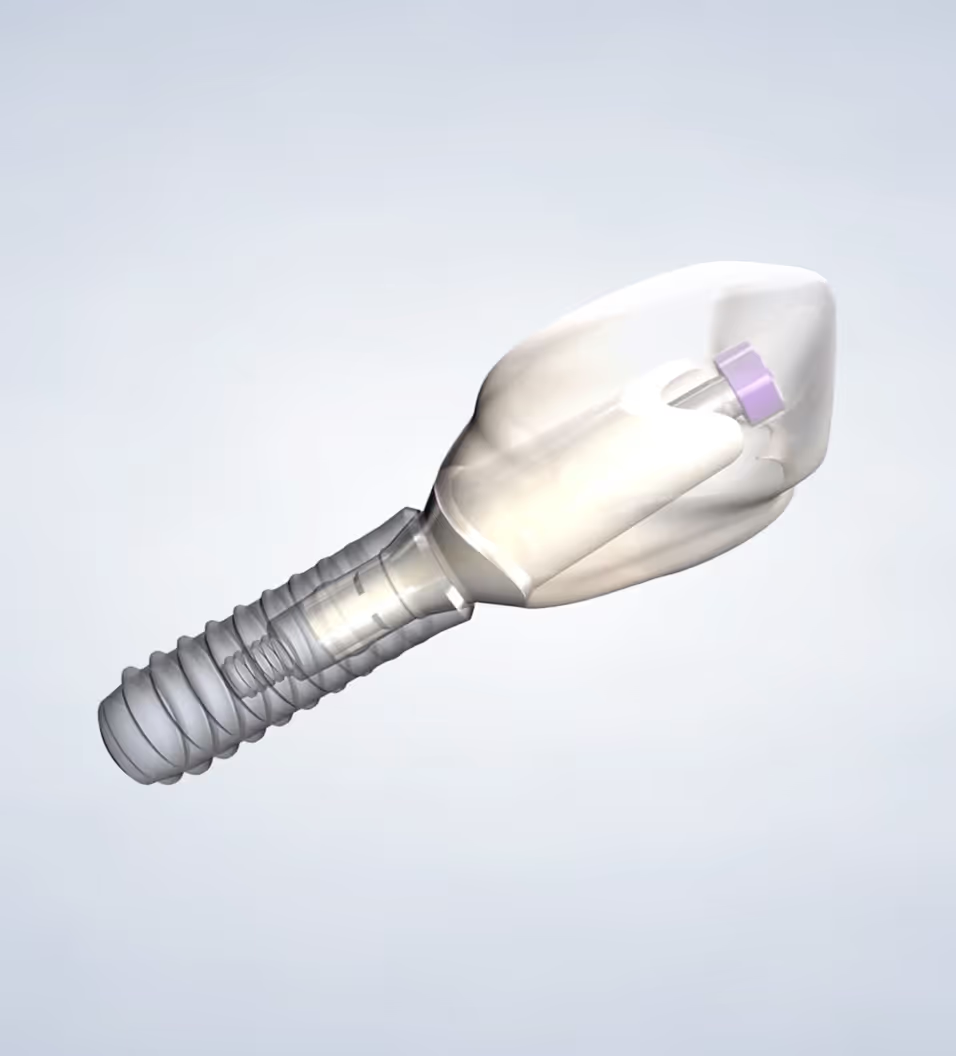
A dental implant is a post placed in the jawbone to replace the root of a missing tooth. After the surrounding bone heals around the implant, it may support a crown, bridge, implant-supported denture, or fixed full-arch restoration.
A completed implant restoration generally includes:
- The implant within the jawbone
- An abutment connecting the implant to the restoration
- A crown, bridge, or prosthesis replacing the visible teeth
The oral surgeon places the implant and performs any necessary bone reconstruction. The patient’s restorative dentist typically creates and places the final teeth. Planning these surgical and restorative phases together helps position the implant for comfortable function and a natural-looking result.
What Are the Benefits of Dental Implants?
Dental implants replace missing teeth without depending exclusively on the gums or adjacent teeth for support. For appropriate patients, they may restore chewing stability, improve confidence in the smile, and help preserve bone at the implant site.
Compared with other tooth-replacement options, implants may:
- Replace one tooth without preparing healthy neighboring teeth for a conventional bridge
- Secure a bridge or denture more firmly
- Support a fixed replacement for an entire upper or lower arch
- Feel more stable during eating and speaking
- Provide a long-term foundation when maintained properly
Implants are not maintenance-free or guaranteed to last for life. Their long-term health depends on effective home care, professional cleanings, healthy gum tissue, appropriate bite forces, and control of factors such as nicotine use or certain medical conditions.
Which Type of Dental Implant Treatment May Be Appropriate?
The right approach depends on how many teeth are missing, the condition of the remaining teeth, available bone, bite, gum health, and the restoration being planned.
Single-Tooth Implant
One implant may support an individual crown when a single tooth is missing. Unlike a traditional bridge, this option does not require the neighboring teeth to carry the replacement.
Implant-Supported Bridge
Several missing teeth may be replaced with a bridge supported by strategically positioned implants. The number of implants varies according to the location of the space, bone anatomy, bite forces, and design of the restoration.
Implant-Supported Denture
Implants may provide greater retention for a removable denture, reducing movement during eating and speaking. Some implant-supported restorations remain removable for cleaning, while others are fixed in place.
Full-Arch Dental Implants
A full-arch restoration replaces all teeth in the upper or lower jaw using multiple implants. The number and distribution of implants are selected for the patient’s anatomy and planned prosthesis. Explore full-arch dental implants for more information about fixed teeth, provisional restorations, and treatment planning.
Zygomatic Implants
Patients with severe upper-jaw bone loss may not have enough bone for conventional implant placement. In selected cases, zygomatic implants use the cheekbone for support and may provide an alternative to extensive upper-jaw grafting.
Am I a Candidate for Dental Implants?
A candidate for dental implants generally has one or more missing or failing teeth, oral tissues healthy enough for surgery, and sufficient bone or an appropriate bone-building option. Medical health, medications, gum condition, nicotine use, hygiene, and restorative needs also influence candidacy.
An implant evaluation should consider:
- Which teeth are missing, damaged, or failing
- The amount and quality of available jawbone
- Gum health and history of periodontal disease
- Nearby roots, nerves, and sinus anatomy
- Current health conditions and medications
- Tobacco, nicotine, grinding, or clenching
- The proposed crown, bridge, denture, or full-arch restoration
- The patient’s ability to maintain hygiene and follow-up care
Age alone does not determine candidacy. Some medical or dental concerns may require additional planning rather than automatically excluding treatment.
Can I Get Dental Implants If I Have Bone Loss?
Often, yes. Bone loss may change the treatment plan, but it does not necessarily prevent implant placement. Depending on the location and extent of the deficiency, the surgeon may recommend ridge preservation, bone grafting, sinus augmentation, staged reconstruction, or an alternative implant design.
Minor grafting may sometimes be completed when the implant is placed. More substantial reconstruction may need to heal first. The bone-grafting process is individualized according to the anatomy of the site and the support required for the final restoration.
Patients with advanced upper-jaw bone loss may also be evaluated for zygomatic implants. A 3D examination is necessary to determine which option offers an appropriate balance of support, complexity, and risk.
How Are Dental Implants Planned?
Dental implant planning begins with the final tooth, not simply the available space in the jaw. The implant must be placed where bone can support it and where the restorative dentist can create a functional, cleansable, well-proportioned replacement.
Oral & Facial Surgery of Naperville uses 3D cone-beam CT imaging and X-Guide navigation for implant planning and selected procedures. Cone-beam CT imaging provides a three-dimensional view of the jawbone, roots, nerve pathways, and sinus spaces. X-Guide may provide real-time information about implant position, angle, and depth during surgery.
These technologies add information and control, but they do not replace surgical judgment. The surgeon determines when guided placement is clinically useful and adapts the plan to the patient’s anatomy.
What Happens During the Dental Implant Process?
Dental implant treatment may involve several stages. The exact sequence depends on whether a tooth must be removed, whether grafting is needed, and when the implant is stable enough to support a restoration.
Consultation and 3D Evaluation
The surgeon examines the mouth, reviews the patient’s health history, and evaluates the proposed implant site. Imaging helps assess bone dimensions and nearby anatomy. The visit also covers treatment alternatives, anesthesia, timing, risks, fees, and coordination with the restorative dentist.
Tooth Removal and Site Preparation
A failing tooth may need to be removed before the implant is placed. In suitable conditions, removal and implant placement may occur during the same appointment. Other sites benefit from grafting or healing before implant surgery.
Implant Placement
The treatment area is numbed, and the implant is placed in a carefully planned position within the jawbone. The surgeon may use guided navigation depending on the case.
Healing and Osseointegration
Osseointegration is the process through which bone develops a close connection with the implant surface. This healing creates the support needed for the final tooth. Timing varies with the implant site, bone quality, grafting, medical health, and stability achieved during surgery.
Final Restoration
After the implant is ready, the restorative dentist attaches or creates the crown, bridge, denture, or full-arch prosthesis. Some patients may wear a temporary tooth during healing, but immediate provisional teeth are not appropriate for every implant.
Can a Tooth Be Removed and Replaced With an Implant the Same Day?
Sometimes. Immediate implant placement may be considered when the extraction site has suitable bone, infection can be managed, and the implant can be positioned with adequate stability. If these conditions are not present, grafting and staged treatment may offer a more appropriate foundation.
An implant placed on the day of extraction is not always fitted with its final crown that day. Implant placement, temporary teeth, biological healing, and delivery of the definitive restoration are separate decisions.
Anesthesia and Sedation Options
The anesthesia plan is selected according to the procedure, medical history and patient’s comfort needs. Available options may include local anesthesia, nitrous oxide, intravenous sedation or general anesthesia.
What Is Recovery After Dental Implant Surgery Like?
Recovery varies, but swelling, tenderness, bruising, and minor bleeding may occur during the first several days. A single uncomplicated implant generally involves a different recovery than multiple implants, bone grafting, or full-arch surgery.
Patients receive instructions for medication, oral hygiene, diet, activity, and follow-up. Softer foods are often more comfortable initially, and the surgical site should be protected while it begins to heal. Nicotine use may interfere with healing and increase the risk of implant complications.
Contact the practice promptly for bleeding that does not slow, pain or swelling that worsens after initially improving, fever, drainage, persistent numbness, difficulty swallowing or breathing, or another concerning change.
How Long Does Dental Implant Treatment Take?
Dental implant treatment often unfolds over several months because the implant must develop stable support within the jawbone before receiving the final restoration. The timeline may be shorter or longer depending on tooth removal, grafting, bone quality, healing, and the type of replacement teeth.
Some patients qualify for an earlier temporary restoration. Terms such as “same-day teeth” typically describe provisional teeth attached during the surgical phase, not the completion of healing or delivery of the final prosthesis.
A consultation provides a more meaningful timeline based on the patient’s anatomy and proposed treatment.
What Are the Risks of Dental Implants?
Dental implant surgery has potential risks, including infection, bleeding, delayed healing, implant failure, bone loss, gum recession, sinus complications, injury to nearby teeth or nerves, altered sensation, and problems involving the implant components or restoration.
Risk may be affected by bone quality, gum disease, oral hygiene, nicotine use, uncontrolled health conditions, certain medications, grinding, and excessive bite forces. Careful planning and maintenance reduce risk but cannot eliminate it.
If an implant does not integrate or later develops complications, additional treatment or removal may be necessary. These possibilities should be discussed before surgery, particularly for patients with relevant health or anatomical concerns.
Why Choose an Oral Surgeon for Dental Implants?
Dental implant placement is surgery involving bone, soft tissue, nerves, sinus anatomy, and anesthesia. Oral and maxillofacial surgeons complete hospital-based surgical training focused on conditions of the mouth, jaws, and face.
Dr. Maher Jandali and Dr. John Hur each hold dental and medical degrees and are certified by the American Board of Oral and Maxillofacial Surgery. Their training supports implant placement, bone reconstruction, anesthesia, and management of cases complicated by bone loss or previous treatment.
The goal is not simply to place an implant. It is to create a sound surgical foundation for a restoration that functions comfortably, is maintainable, and fits the patient’s broader dental plan.
Caring for Dental Implants
Implants cannot develop cavities, but the tissues surrounding them can become inflamed or lose bone. Consistent care remains essential after treatment.
Long-term maintenance generally includes:
- Brushing and cleaning around the implant as instructed
- Using floss, an interdental brush, or another recommended device
- Attending routine examinations and professional cleanings
- Wearing a nightguard if advised for grinding or clenching
- Avoiding tobacco and nicotine
- Reporting bleeding, swelling, discomfort, looseness, or bite changes
The implant, abutment, and restoration are separate components. A crown or prosthesis may eventually need repair or replacement even when the implant itself remains healthy.
Why Patients Choose Oral & Facial Surgery of Naperville
Implant treatment at Oral & Facial Surgery of Naperville combines board-certified surgical expertise with detailed imaging, guided technology, anesthesia options, and treatment for both routine and complex bone conditions.
Patients are given a plan that explains what is needed, why it is recommended, how the surgical and restorative phases fit together, and what alternatives should be considered. That clarity matters, particularly when treatment involves grafting, multiple implants, or replacement of an entire arch.
The practice also coordinates with referring and restorative dentists so that implant position supports the intended final teeth rather than treating surgery as an isolated step.
Frequently Asked Questions About Dental Implants
The surgical area is numbed before implant placement, so sharp pain should not be felt during the procedure. Pressure, vibration, or movement may still be noticeable. Sedation may be appropriate for anxiety or more extensive treatment. Tenderness and swelling afterward vary, and the surgical team provides instructions for managing the expected recovery.
Dental implants may function for many years, but no lifespan can be guaranteed. Long-term performance depends on bone and gum health, daily hygiene, professional maintenance, nicotine use, medical conditions, bite forces, and the design of the restoration. The crown, bridge, or prosthesis may require repair or replacement even if the implant remains stable.
Possibly, but active gum disease generally needs to be controlled as part of implant planning. A history of periodontal disease may increase the risk of inflammation and bone loss around an implant. Careful maintenance and coordination between the oral surgeon, restorative dentist, and periodontal provider may be important.
Often, although long-term tooth loss and denture wear may reduce jawbone volume. A 3D evaluation can determine whether conventional implants, bone grafting, a full-arch strategy, or zygomatic implants may be appropriate. The recommendation depends on current anatomy and health rather than the number of years dentures have been worn.
The number depends on the teeth being replaced and the planned restoration. One missing tooth commonly requires one implant, while a bridge or full arch may be supported by several. Implant number and distribution should provide suitable support while respecting bone availability, nerve position, sinus anatomy, hygiene needs, and bite forces.
Yes. An implant may fail to integrate during healing or develop complications later. Infection, gum inflammation, bone loss, nicotine use, uncontrolled medical conditions, excessive bite forces, and inadequate hygiene may increase risk. Early evaluation is important if an implant becomes painful, mobile, swollen, or difficult to clean.
Cost depends on the number of implants, imaging, anesthesia, extractions, grafting, surgical complexity, and type of final restoration. The surgical and restorative phases may be billed by different practices. After evaluation, patients receive a treatment-specific estimate and can review available financing options.
Coverage varies substantially among plans. Insurance may contribute toward certain diagnostic, surgical, grafting, anesthesia, or restorative services while excluding others or applying annual limits. Medical coverage applies only in certain circumstances. Patients should confirm benefits for both the surgical procedure and the final restoration before treatment.
Patient Testimonials
Hear from our patients about their experiences with Dental Implants and other procedures.

"I'm April from Naperville, and I came to Oral and Facial Surgery of Naperville for an extraction and an implant. The best thing about this practice is that they made me feel very comfortable. The staff is very compassionate. They make sure you have everything you need. My doctor was very professional, but he was also very friendly, very calming. Everything was very well explained. The procedures, both of them went very well. Having a healthy smile is important to me because it's part of who I am. It was really an extraordinary experience. I would highly recommend this practice to anybody who needs oral surgery of any kind. They're wonderful. All of them."

"Hi, I'm Cindy from North Aurora, and I came to this practice for dental implants. Everybody here is very friendly. The staff here is extremely kind. The doctors here are wonderful, caring, and very considerate. Your case is always unique. The procedure went well. I feel wonderful having my implants. I have the best looking teeth I've had in my whole life, and the quality of life is greatly improved because I can actually chew my food. To all my friends and family in Glenn Ellyn, Aurora, and Bolingbrook, I highly recommend Oral and Facial Surgery of Naperville."

"Hi, I'm Dave from Naperville. I came to Oral and Facial Surgery of Naperville for dental implants, two of them. When I first walked into this practice, I was amazed at the inside of the facility. Staff are very organized and very well trained. I've had one doctor, and I've had him for both of the implants, and I would say very professional. The procedures went very well. The recovery was as they told me it would be. The quality of life improved with having the implants in. Eating food with a smile on my face and enjoy it is nice. I've had a good overall experience at this practice. To all my friends in Naperville, Warrenville, and Lisle, I highly recommend Oral and Facial Surgery of Naperville."
"Hi, I'm Gloria from Channahon. I came to this practice for dental implants. When I first walked into this office, I was really surprised by how comfortable it was. The staff here is beyond professional. They are very personable, very workable and agreeable. Great staff. My doctor was genuinely involved in every aspect of my treatment plan, willing to work with me and interested in making sure that I got the success that I wanted. My comfortableness with being out around people and in society was given back to me. I would absolutely recommend this practice. The best thing about this practice is everything. The overall experience is the absolute best I've ever had anywhere."

"Hi, I'm Jon from Naperville, and I came to Oral and Facial Surgery of Naperville for a tooth extraction and then to have an implant put in. The staff of this place was super warm and welcoming. The doctors here were great. They were patient. They were pretty well informed. Answered all my questions timely, and they really made me feel at ease and comfortable. I feel great now. Quality of life has gotten better. Having a healthy smile is huge 'cause I am speaking a lot throughout the day. So to be presentable, to have a good smile is pivotal. My overall experience with this practice has been fantastic. I would absolutely recommend Oral and Facial Surgery of Naperville."

"Hi, I'm Marie, and I'm from Naperville. I came to this practice for a dental implant. It's a beautiful place. It's a beautiful setting. The staff is lovely. They're just welcoming, nice, kind. My doctor was fabulous, caring, very caring. My procedure went exceedingly well. I'm only 2 weeks post the second procedure that I had done. I've been great. I laugh, I smile, and I have fun all day long. My overall experience here was fabulous. The best thing about this practice has been the professionalism. I would highly recommend this practice to others. It's a good group, good people, highly professional, and so organized, so well-oiled while you're in here that you just feel good like you've come to the right spot."

"Hi, I'm Mitch from Naperville. I came to this practice for dental implants. I came in, the staff was very professional. The space was very clean. My doctor was very gentle, informative, courteous, professional, and very willing to respond to any questions that I had. The implants have gone really well. My quality of life has really improved. It's nice to have teeth where you ought to have teeth. It's important to have a healthy smile. I have a public-facing role, and so that is important. I would recommend this practice. It's been a great practice. I'm really thankful for all that I've received."
"Hi, I'm Amer. I'm from Countryside, Illinois, and I came to Oral and Facial Surgery of Naperville to have my wisdom teeth extracted. The first thing I noticed was doctors walking in, a smile on their face, very welcoming. They treated me as if I was family. The recovery from my procedure was extremely quick, and I would say overall quality of life is significantly improved. I was able to do the things I wanted to do and to eat the food that I really wanted to eat. Overall, I would say my experience was excellent. The practice is extremely professional. The wait time was incredibly short for the procedure, for the recovery. I would recommend this practice to friends, family. This is the best practice I've ever been to for my medical care."

"Hi, I'm Cesar from Chicago, and I came to this practice for jaw surgery. When I first walked into this practice, I felt really at home. The doctors in this practice really are like none other. I knew that the work that was going to be done on me was going to be great. My procedure went very well. The attention to detail, the attention to the follow-up with the doctors in the hospital was phenomenal. This was the only place that was able to do my surgery, and now my jaw is completely stable. Having a healthy smile at my age is so important. To all my friends in Naperville, Lisle, and Warrenville, I would highly recommend Oral and Facial Surgery of Naperville."
Schedule a Dental Implant Consultation in Naperville
The right implant plan should account for more than the space left by a missing tooth. It should consider bone, gum health, bite, appearance, long-term maintenance, and the restoration that will complete the smile. To discuss dental implants with Dr. Jandali or Dr. Hur, contact Oral & Facial Surgery of Naperville. The practice is located at 129 N Washington Street in downtown Naperville and serves patients throughout DuPage County and the surrounding Chicagoland communities.