Wisdom Teeth Removal in Naperville, IL
Safe, Comfortable Removal by Board-Certified Oral Surgeons
Concern about wisdom teeth often begins with a question: remove them now, monitor them, or wait until they cause trouble? The right answer depends on how the teeth are developing, whether disease is present, and how their position may affect the surrounding gums, bone, nerves, and neighboring teeth.
At Oral and Facial Surgery of Naperville, board-certified oral and maxillofacial surgeons Dr. Maher Jandali, DMD, MD and Dr. John Hur, DDS, MD evaluate and remove wisdom teeth for teens and adults. Each recommendation is based on the individual tooth, not an automatic assumption that every wisdom tooth must come out.
Our practice serves patients from Naperville, DuPage County, and communities throughout the greater Chicagoland area.
What Are Wisdom Teeth?
Wisdom teeth, also called third molars, are the last permanent teeth to develop. They sit at the back of the upper and lower jaws and commonly emerge during the late teens or early twenties.
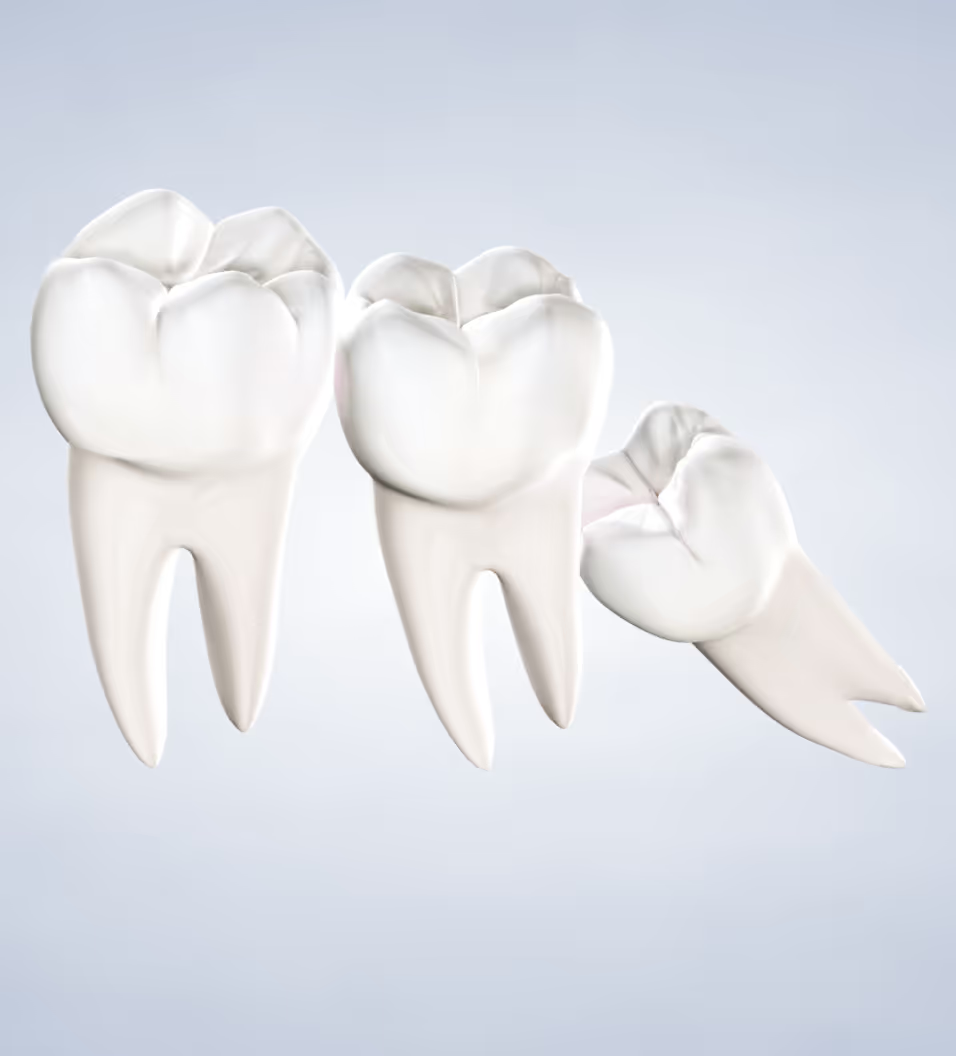
A wisdom tooth is considered impacted when it cannot erupt fully into a healthy, functional position. It may remain beneath the gum and bone, emerge only partially, tilt toward the second molar, or lie horizontally within the jaw.
Impacted teeth do not always hurt. An examination and appropriate imaging can reveal their position and help determine whether removal or continued monitoring is the more responsible choice.
Do Wisdom Teeth Always Need to Be Removed?
No. A wisdom tooth may remain in place when it is fully erupted, functional, painless, disease-free, and easy to clean. Retained wisdom teeth still require regular dental examinations and periodic imaging because their condition can change.
Removal may be recommended when a wisdom tooth is associated with:
- Pain, pressure, or recurrent tenderness
- Infection or swelling
- Decay that cannot be predictably restored
- Gum disease or bone loss
- Damage to a neighboring tooth
- A cyst, tumor, or other pathology
- Partial eruption that traps food and bacteria
- An unfavorable position that prevents adequate cleaning or monitoring
The absence of symptoms does not necessarily mean that a tooth is healthy. It also does not, by itself, justify surgery. The consultation should weigh the current findings, future risks, surgical considerations, and option of observation.
When Should Wisdom Teeth Be Evaluated?
Wisdom teeth are often evaluated during the teenage years or early adulthood, while their roots and position are still developing. There is no universally correct age for removal.
In some patients, surgery may be less complex before the roots are fully formed and the surrounding bone becomes denser. Adults can also undergo wisdom teeth removal when treatment is indicated, although anatomy, health, and healing considerations may differ.
An evaluation is especially important when pain, swelling, difficulty opening the mouth, an unpleasant taste, drainage, fever, or tenderness develops near the back teeth.
What Happens During a Wisdom Teeth Consultation?
A wisdom teeth consultation determines whether treatment is needed and how it can be approached safely. The surgeon reviews the patient’s symptoms, medical and dental history, medications, allergies, previous anesthesia experiences, and available X-rays.
The examination considers:
- The number and position of the wisdom teeth
- Whether each tooth is erupted, partially erupted, or impacted
- Root development and shape
- The condition of nearby teeth, gums, and bone
- Proximity to nerves and sinuses
- Evidence of infection, decay, or other pathology
- The anticipated surgical approach
- Appropriate anesthesia options
- Individual risks and recovery expectations
When more anatomical detail is needed, 3D cone-beam CT imaging may help the surgeon evaluate the roots, jawbone, nerves, sinuses, and adjacent teeth. Three-dimensional imaging is used selectively according to the needs of the case.
Patients can review the practice’s first-visit information before their appointment.
How Are Wisdom Teeth Removed?
The surgical approach depends on how each tooth is positioned. A fully erupted wisdom tooth may be removed with a straightforward extraction. An impacted tooth may require a small incision in the gum, removal of a limited amount of surrounding bone, or division of the tooth into sections for controlled removal.
After extraction, the site is cleaned and may be closed with dissolvable sutures. Gauze helps control bleeding and supports formation of the blood clot needed for healing.
Procedure length varies with the number of teeth, depth and direction of impaction, root anatomy, proximity to important structures, and other case-specific factors. The surgeon will explain the anticipated plan before treatment.
Anesthesia and Sedation Options
The anesthesia plan is selected according to the procedure, medical history and patient’s comfort needs. Available options may include local anesthesia, nitrous oxide, intravenous sedation or general anesthesia.
What Is Wisdom Teeth Recovery Like?
Swelling, soreness, minor bleeding, and temporary jaw stiffness are common during the early recovery period. Their intensity and duration depend on the number and position of the teeth, the complexity of surgery, and individual healing.
Swelling often becomes more noticeable during the first few days before it begins to improve. Many patients return to light activities within several days, but school, work, exercise, and other responsibilities should resume according to comfort and the surgeon’s instructions.
Recovery generally includes:
- Taking prescribed or recommended medication as directed
- Using cold packs according to the postoperative plan
- Drinking adequate fluids
- Beginning with soft foods
- Avoiding straws, forceful rinsing, and vigorous spitting
- Avoiding smoking, vaping, nicotine, and tobacco
- Keeping the mouth clean without disturbing the surgical sites
- Postponing strenuous activity until cleared
Individual instructions take priority over general guidance. Review the practice’s complete postoperative instructions and contact the office with questions rather than changing the plan independently.
What Can I Eat After Wisdom Teeth Removal?
Soft foods that require little chewing are generally most comfortable at first. Options may include yogurt, applesauce, eggs, oatmeal, mashed potatoes, or blended soup that has cooled to a safe temperature.
Patients can gradually add more substantial foods as comfort and jaw movement improve. Hard, crunchy, sharp, sticky, or very hot foods may irritate the extraction sites. Seeds, popcorn, and other small particles can also become trapped in the healing areas.
Avoid drinking through a straw for the period specified by the surgical team. The suction may disturb the protective blood clot.
What Are the Risks of Wisdom Teeth Removal?
Wisdom teeth removal is common, but it remains a surgical procedure. Possible complications include dry socket, infection, prolonged bleeding, delayed healing, injury to a neighboring tooth or restoration, jaw stiffness, sinus complications, and temporary or, rarely, persistent changes in sensation from nerve irritation or injury.
The likelihood of a particular complication depends on tooth position, root anatomy, age, health, medication use, tobacco or nicotine exposure, and surgical complexity. Careful examination and imaging allow the surgeon to identify relevant concerns and discuss them before treatment.
Contact the practice promptly for severe or increasing pain, excessive bleeding, fever, pus or drainage, worsening swelling after initial improvement, persistent vomiting, or numbness that causes concern. Difficulty breathing or swallowing requires immediate emergency care.
What Is Dry Socket?
Dry socket occurs when the blood clot protecting an extraction site breaks down, becomes displaced, or does not form properly. The exposed bone may cause severe pain, often beginning several days after surgery and sometimes radiating toward the ear or temple.
Smoking, vaping, forceful rinsing, straw use, and disruption of the surgical site may increase the risk. Patients who develop intense or worsening pain, an unpleasant taste, or a foul odor should contact the surgical team. Dry socket is treatable and should not be managed by placing unapproved substances into the extraction site.
Why Choose Oral and Facial Surgery of Naperville?
Wisdom teeth can be close to sensory nerves, sinus spaces, adjacent teeth, and other important anatomy. Oral and maxillofacial surgeons receive hospital-based training in surgery and anesthesia focused on the mouth, jaws, face, and related structures.
Dr. Jandali and Dr. Hur both hold dental and medical degrees and are certified by the American Board of Oral and Maxillofacial Surgery. Dr. Jandali completed his oral and maxillofacial surgery residency at Columbia University. Dr. Hur completed his residency at NewYork-Presbyterian Hospital and Columbia University Medical Center.
Their approach combines individualized diagnosis, appropriate imaging, anesthesia planning, surgery, and recovery guidance within one Naperville practice. Patients can also view wisdom teeth removal experiences shared by practice patients.
Frequently Asked Questions About Wisdom Teeth Removal
Yes. Wisdom teeth may develop decay, gum disease, bone loss, infection, or damage to a neighboring tooth before symptoms become obvious. Clinical examinations and imaging can identify changes that are not visible or painful. Healthy wisdom teeth may be retained, but they should continue to receive professional monitoring.
Not always. Removing several problematic wisdom teeth during one procedure may avoid separate surgeries and recovery periods, but each tooth should be assessed individually. The surgeon will consider the condition, position, anatomy, and future risk of every wisdom tooth before recommending how many to remove.
Anesthesia is used to control pain during surgery. A patient receiving local anesthesia may notice pressure or movement, while sedation can reduce awareness and anxiety. Soreness and swelling are expected afterward, but the experience varies. The surgical team will provide an individualized plan for postoperative comfort.
The time required depends on the number of teeth, whether they are erupted or impacted, their root anatomy, and their relationship to nerves or sinuses. A straightforward extraction may be relatively brief, while removal of multiple deeply impacted teeth may take longer. The surgeon can provide a more useful estimate after reviewing the examination and imaging.
Many patients reserve several days for early recovery, but the appropriate interval depends on the surgery and the demands of work or school. Activities involving heavy lifting, frequent speaking, driving, or physical exertion may require more time. Follow the surgeon’s recommendation rather than relying on a fixed recovery promise.
Patients receiving IV sedation or general anesthesia cannot drive themselves home. A responsible adult must provide transportation and follow the practice’s supervision instructions. Driving may also be unsafe while taking certain pain medications. Confirm transportation requirements with the team before surgery.
Cost depends on the number and position of the teeth, surgical complexity, imaging, anesthesia, and insurance benefits. The practice can provide an individualized estimate after evaluation. Dental or medical coverage may apply depending on the diagnosis and plan. Patients can also review available financing options.
Referral and authorization requirements depend on the patient’s insurance plan. Patients may contact Oral and Facial Surgery of Naperville directly, but should confirm whether their coverage requires a dentist’s referral. Existing X-rays and records may be useful and can often be coordinated before the appointment.
Patient Testimonials
Hear from our patients about their experiences with Wisdom Teeth Removal and other procedures.
"Hi, I'm Amer. I'm from Countryside, Illinois, and I came to Oral and Facial Surgery of Naperville to have my wisdom teeth extracted. The first thing I noticed was doctors walking in, a smile on their face, very welcoming. They treated me as if I was family. The recovery from my procedure was extremely quick, and I would say overall quality of life is significantly improved. I was able to do the things I wanted to do and to eat the food that I really wanted to eat. Overall, I would say my experience was excellent. The practice is extremely professional. The wait time was incredibly short for the procedure, for the recovery. I would recommend this practice to friends, family. This is the best practice I've ever been to for my medical care."
"Hi, I'm Deena from DeKalb, and I came to Oral and Facial Surgery of Naperville to get my wisdom teeth taken out. When I walked into this practice, I felt very comfortable and at ease and knew I was going to have a good experience. The staff here are very friendly. The doctors here were fantastic and welcoming. They provide the best care. My procedure went well, and the recovery was smooth and easy, and my quality of life after getting my wisdom teeth out has improved greatly. I love having a healthy smile because that is the first thing that everyone will see when they look at you. My overall experience was amazing. I give it a 10 out of 10. I highly recommend Oral and Facial Surgery of Naperville."

"Hi, I'm Ramez from Burr Ridge, and I came to Oral and Facial Surgery of Naperville to have my wisdom teeth removed. When I first walked into this practice, I felt that the atmosphere was very welcoming. Everyone was very polite, very kind, and everyone did their job extremely well. The doctors here are some of the best that I've ever seen. I was in and out so quickly. My procedure went really well. They took the time to talk to me about my options and what I needed to do, and they made the whole process really easy. I feel very relieved to have gotten my procedure done at such a great place. Smile is really important to me. I think it's huge. It's a big confidence thing. My overall experience with the practice was phenomenal. The atmosphere and the treatment that I received here is the best that I've ever seen. To all my friends in Downers Grove, Glen Ellyn, and Bolingbrook, I highly recommend Oral and Facial Surgery of Naperville."

"Hi, I'm Roxanna from Aurora. I came to this practice to get my wisdom teeth removed. When I first walked into this practice, I felt so comfortable; it almost felt like family. The staff here is really kind and super welcoming. The doctors here are the best doctors I've ever met. They really listen to you, they're very understanding, and they make you feel very comfortable. My procedure went very well, and the recovery was really easy. I just went to sleep and then woke up, and everything was done. My quality of life is just so much better. Having a healthy smile is everything. My overall experience with this practice was phenomenal. I would highly recommend this practice to anybody with oral surgery needs."
"Hi, I'm Zeyad from Chicago, and I came to Oral and Facial Surgery of Naperville to have my wisdom teeth extracted. I felt very welcomed when I entered the practice. I was greeted with very friendly and warm smiles. This practice has the very best patient interaction that I've ever experienced. The doctors here were absolutely excellent. They're very professional, very courteous, and always open to answering questions. My procedure was phenomenal, and the recovery was smooth and easy. One of the first things people notice about you is your smile. I interact with a lot of new people on a daily basis, and I'm glad that I get to interact with them and have this smile every day. I would so highly recommend this practice based on the doctors, the staff, and the overall experience here."

"I'm April from Naperville, and I came to Oral and Facial Surgery of Naperville for an extraction and an implant. The best thing about this practice is that they made me feel very comfortable. The staff is very compassionate. They make sure you have everything you need. My doctor was very professional, but he was also very friendly, very calming. Everything was very well explained. The procedures, both of them went very well. Having a healthy smile is important to me because it's part of who I am. It was really an extraordinary experience. I would highly recommend this practice to anybody who needs oral surgery of any kind. They're wonderful. All of them."
"Hi, I'm Cesar from Chicago, and I came to this practice for jaw surgery. When I first walked into this practice, I felt really at home. The doctors in this practice really are like none other. I knew that the work that was going to be done on me was going to be great. My procedure went very well. The attention to detail, the attention to the follow-up with the doctors in the hospital was phenomenal. This was the only place that was able to do my surgery, and now my jaw is completely stable. Having a healthy smile at my age is so important. To all my friends in Naperville, Lisle, and Warrenville, I would highly recommend Oral and Facial Surgery of Naperville."

"Hi, I'm Cindy from North Aurora, and I came to this practice for dental implants. Everybody here is very friendly. The staff here is extremely kind. The doctors here are wonderful, caring, and very considerate. Your case is always unique. The procedure went well. I feel wonderful having my implants. I have the best looking teeth I've had in my whole life, and the quality of life is greatly improved because I can actually chew my food. To all my friends and family in Glenn Ellyn, Aurora, and Bolingbrook, I highly recommend Oral and Facial Surgery of Naperville."
"Hi, I'm Dave from Naperville. I came to Oral and Facial Surgery of Naperville for dental implants, two of them. When I first walked into this practice, I was amazed at the inside of the facility. Staff are very organized and very well trained. I've had one doctor, and I've had him for both of the implants, and I would say very professional. The procedures went very well. The recovery was as they told me it would be. The quality of life improved with having the implants in. Eating food with a smile on my face and enjoy it is nice. I've had a good overall experience at this practice. To all my friends in Naperville, Warrenville, and Lisle, I highly recommend Oral and Facial Surgery of Naperville."
Schedule a Wisdom Teeth Consultation in Naperville
A consultation can clarify whether wisdom teeth should be removed or monitored and what treatment would involve. Dr. Jandali or Dr. Hur will evaluate the teeth, review relevant imaging, discuss anesthesia and surgical considerations, and provide individualized recovery guidance. Contact Oral and Facial Surgery of Naperville or call (630) 961-5151 to schedule an appointment at 129 N Washington Street, Naperville, IL 60540.